Diagnose
The Vibe Coding Exam diagnoses real development judgment rather than tool-menu memory. Every Vibe Coding Exam question maps to a choice that appears in an actual project.
Vibe Coding Exam entry
The Vibe Coding Exam is a practical assessment for AI coding learners. It does not reward memorized trivia. The Vibe Coding Exam checks whether you can give AI clear context, split work, verify results, and turn the Vibe Coding Exam score into a focused practice plan.
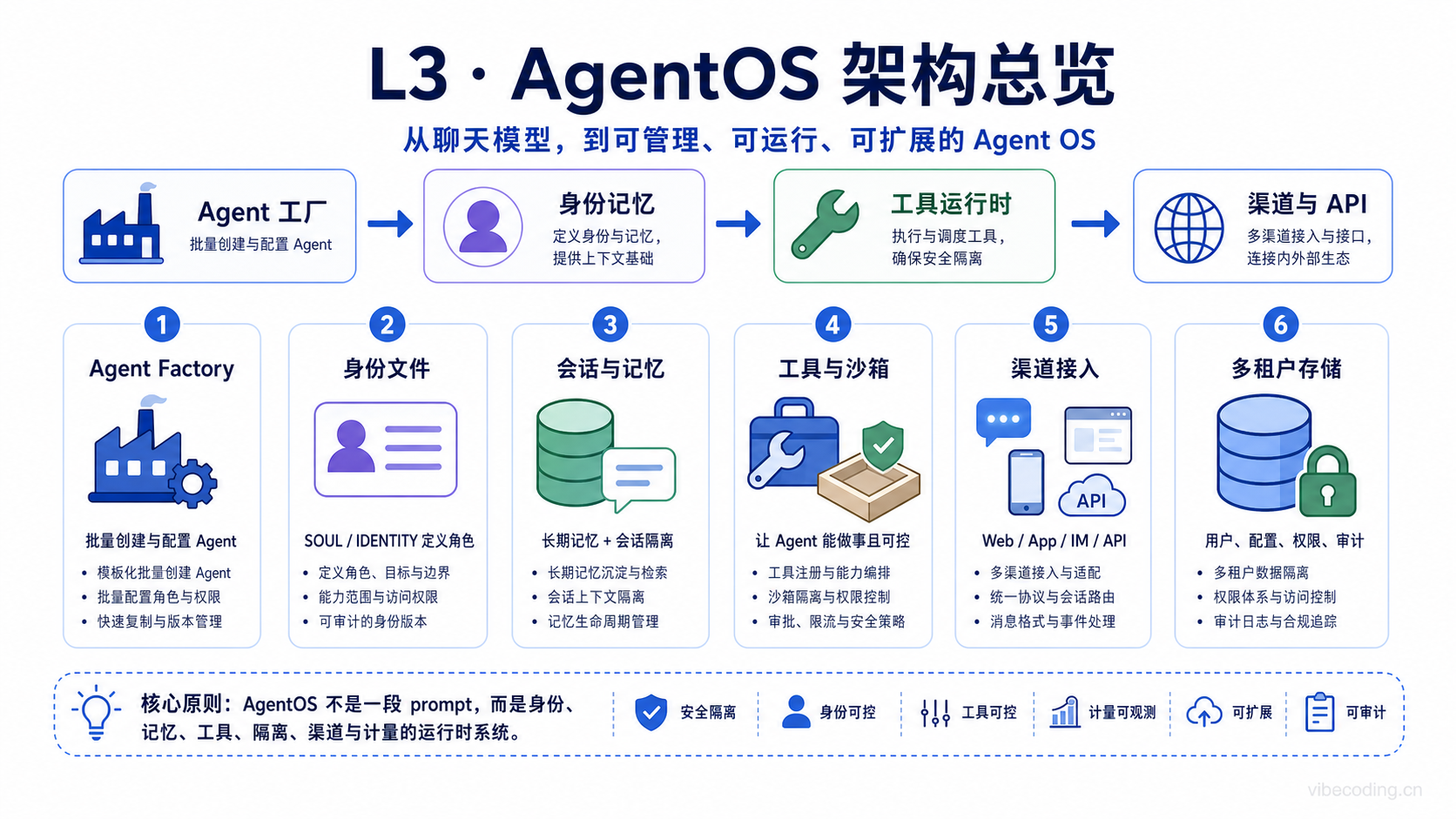
One Vibe Coding Exam, a real capability signal
This Vibe Coding Exam page loads the published question bank, learning infographic, instant explanations, and certificate rules so learners can move from answers into review.
Why the Vibe Coding Exam matters
The Vibe Coding Exam turns AI coding learning from a feeling into evidence. It shows whether your weak spot is context, decomposition, verification, or iteration.
The Vibe Coding Exam diagnoses real development judgment rather than tool-menu memory. Every Vibe Coding Exam question maps to a choice that appears in an actual project.
After you submit the Vibe Coding Exam, explanations show why the reliable option works and why the risky option fails, turning the Vibe Coding Exam score into review language.
The Vibe Coding Exam emphasizes behavior-based verification. Compiling is only the start; reliable AI coding also checks boundaries, failure states, and launch evidence.
Vibe Coding Exam capability map
The Vibe Coding Exam checks whether you can state the goal, stack, constraints, inputs, outputs, and acceptance criteria before asking AI for code.
The Vibe Coding Exam checks whether you can split a large request into data, API, UI, state, validation, and review steps instead of pasting one giant AI answer.
The Vibe Coding Exam checks whether you know that a successful build is not the same as correct behavior, and whether you can test the real flow and edge states.
The Vibe Coding Exam checks whether you can turn missed answers, errors, and user feedback into the next prompt so AI coding becomes an improving loop.
Many learners think opening Cursor, Claude Code, or Codex means they already understand Vibe Coding. The Vibe Coding Exam looks deeper. You need to know when to add context, when to ask AI to split work, when to read the diff yourself, and when to prove the result in a real page or test. The Vibe Coding Exam turns those decisions into concrete questions.
Use the Vibe Coding Exam before learning, during learning, and before project delivery. Before learning, the Vibe Coding Exam reveals whether you are only copying answers. During learning, the Vibe Coding Exam shows which habit needs deliberate practice. Before delivery, the Vibe Coding Exam reminds you to gather verification evidence. It is not a formal job exam; it is a repeatable AI coding diagnostic.
The Vibe Coding Exam questions cover prompts, task decomposition, code understanding, error handling, interface checks, launch review, and certificate standards. After each Vibe Coding Exam attempt, record three things: what judgment failed, how to avoid it in the next project, and what format AI should use to help you inspect the work. That makes the Vibe Coding Exam a learning path rather than a one-time score.
If you teach AI coding, the Vibe Coding Exam can become a shared language before and after class. Teachers can use the Vibe Coding Exam to see whether students understand context and verification. Teams can use the Vibe Coding Exam to discuss reliable delivery habits. Individuals can use the Vibe Coding Exam to decide whether the next practice should focus on Cursor, prompt engineering, or project review.
A useful assessment should send you away with a concrete action. If the context questions are weak, your next prompt should include background, constraints, and acceptance criteria. If the verification questions are weak, your next project should start with a behavior checklist and real failure states. If the iteration questions are weak, ask AI to explain why a change failed before asking for a new answer. The point is not to collect a perfect score; the point is to turn a score into the next small habit.
People who search for an AI coding exam usually want more than a quiz. They want to know whether they can use AI responsibly in real software work: reading generated code, spotting missing requirements, confirming that a page behaves correctly, and deciding when a model answer is not enough. This page keeps the question bank, certificate line, study visuals, FAQ, and live assessment in one place so the learner can understand the standard, take the assessment, and immediately review the result.
After the Vibe Coding Exam, put the result back into project work. Turn missed Vibe Coding Exam explanations into prompt checklists, turn strong Vibe Coding Exam topics into confidence signals, and use a Vibe Coding Exam certificate as a dated learning record. When the Vibe Coding Exam result changes the next feature you build, the assessment becomes part of your operating rhythm. The safest habit is to change one small part of a workflow, verify it carefully, and only then widen the scope so learning evidence grows with real delivery. The longer guide exists so search visitors and active learners can understand the standard clearly and confidently before they answer.
Self-service exam
Each topic now has 10 scenario questions plus a learning infographic, testing the habits that make AI-assisted development reliable: context, decomposition, verification, and iteration.
Assessment progress
0 of 4 answered
Certificate line: answer at least 8/10 correctly in each topic and complete 4 qualified topics in the same category.
Quick diagnostic
Answer 0 of 4 questions to submit.
Assessment flow
The Vibe Coding Exam flow is short, but every step is tied to real project capability. Choose a topic, answer scenarios, read explanations, and review certificate readiness.
Start with an L1, L2, or L3 topic. The Vibe Coding Exam separates different stages of AI coding so every result has a clear practice target.
Each Vibe Coding Exam attempt uses scenarios. You decide how to prompt AI, split work, respond to uncertainty, and protect the project.
After submitting, do not stop at the score. Vibe Coding Exam explanations identify which habit is affecting project quality.
When your Vibe Coding Exam result reaches the certificate line, the system can issue a verifiable certificate for the topic and category.
The Vibe Coding Exam is for anyone who wants to turn AI coding from experimentation into capability. Beginners, builders, teams, and teachers can all use the Vibe Coding Exam as a shared standard.
If you are starting with Cursor, Claude Code, or Codex, the Vibe Coding Exam shows whether you can describe goals and acceptance criteria instead of only asking AI for answers.
If you already use AI inside projects, the Vibe Coding Exam checks whether decomposition, rollback thinking, tests, and launch verification are part of your workflow.
Teams can use the Vibe Coding Exam as a lightweight capability baseline for requirement writing, code review, error review, and delivery evidence.
Teachers can assign the Vibe Coding Exam before and after a module, then use scores and explanations to see whether AI coding workflow concepts landed.
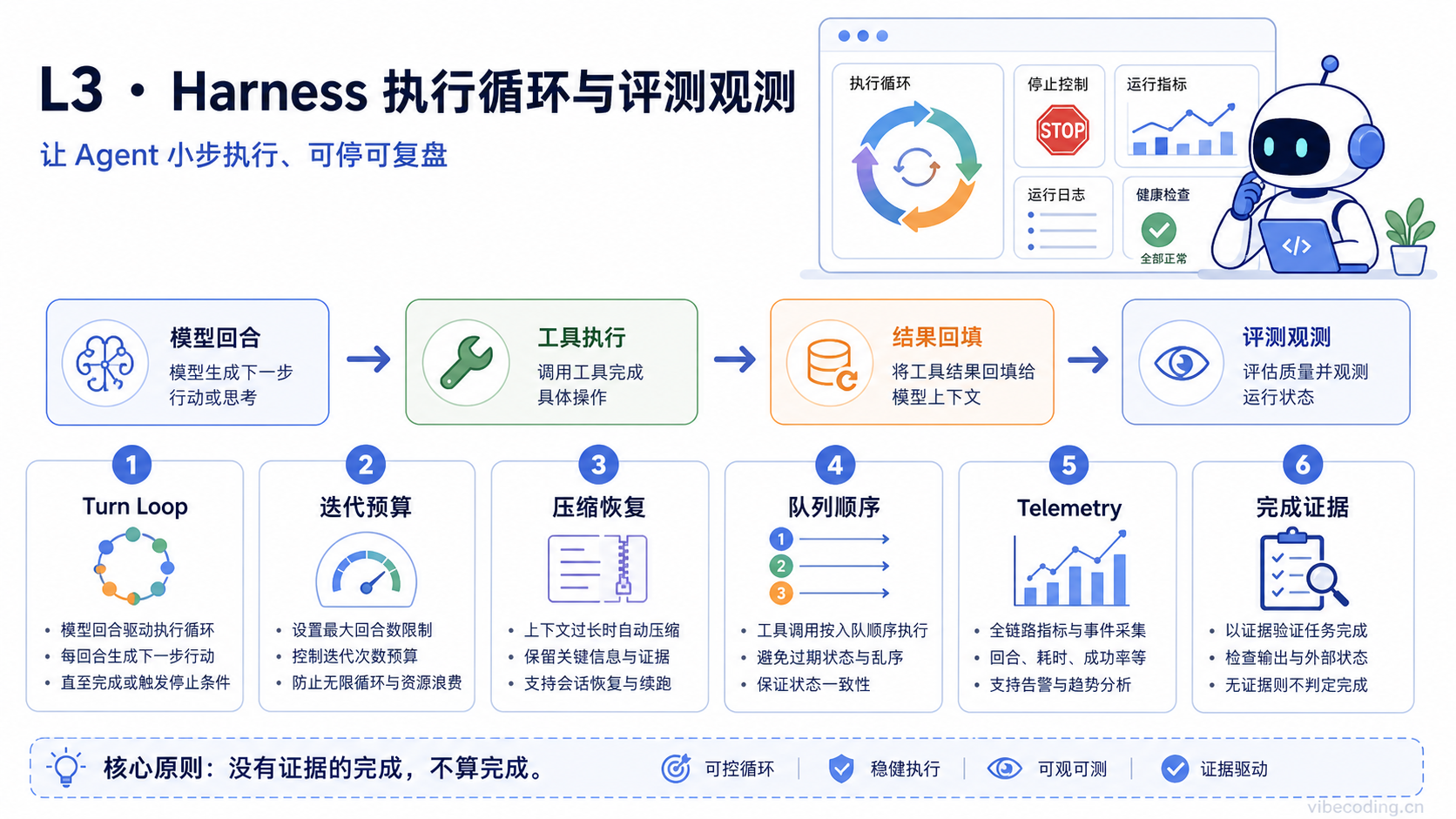
From Vibe Coding Exam to project evidence
A strong Vibe Coding Exam should not stop at multiple choice. It should help learners convert missed explanations into a real project checklist.
FAQ
These answers explain the Vibe Coding Exam goal, score, certificate, AI tutor, and boundaries so you can start with the right expectation.
The Vibe Coding Exam is an AI coding assessment that uses scenario questions to check context, decomposition, verification, and error review. The Vibe Coding Exam is not a university-style exam; it is a practical health check for project habits.
A Vibe Coding Exam score reflects judgment stability within one topic. A high Vibe Coding Exam result suggests stronger AI coding habits. A low result should become a practice checklist built from the explanations.
A Vibe Coding Exam topic generally requires all 10 questions and at least 8 correct answers to reach the certificate line. The system also checks enough qualified topics in the same category before issuing a verifiable Vibe Coding Exam learning certificate.
Before submission, the Vibe Coding Exam tutor gives hints and analogies without revealing the answer. After submission, the tutor can explain missed questions and help turn the Vibe Coding Exam result into the next practice task.
Yes. L1 topics in the Vibe Coding Exam are designed for beginners and start with prompts, context, and basic verification so you can see what to practice first.
Yes, and retaking the Vibe Coding Exam is recommended. Use the first attempt to diagnose, the second attempt to validate practice, and later attempts to see whether your real project habits are improving.
The Vibe Coding Exam is not a course and does not replace structured training. It focuses on assessment and review. Use the Vibe Coding Exam to find weak spots, then choose the learning resource that matches them.
A standalone /exam page lets the Vibe Coding Exam title, description, visible copy, FAQ, image alt text, canonical URL, and hreflang signals live on one indexable page instead of only inside a homepage anchor.
Start with one Vibe Coding Exam
Complete the Vibe Coding Exam, then turn missed explanations into next week's practice checklist. When you can explain, verify, and review consistently, the Vibe Coding Exam certificate has real meaning.